
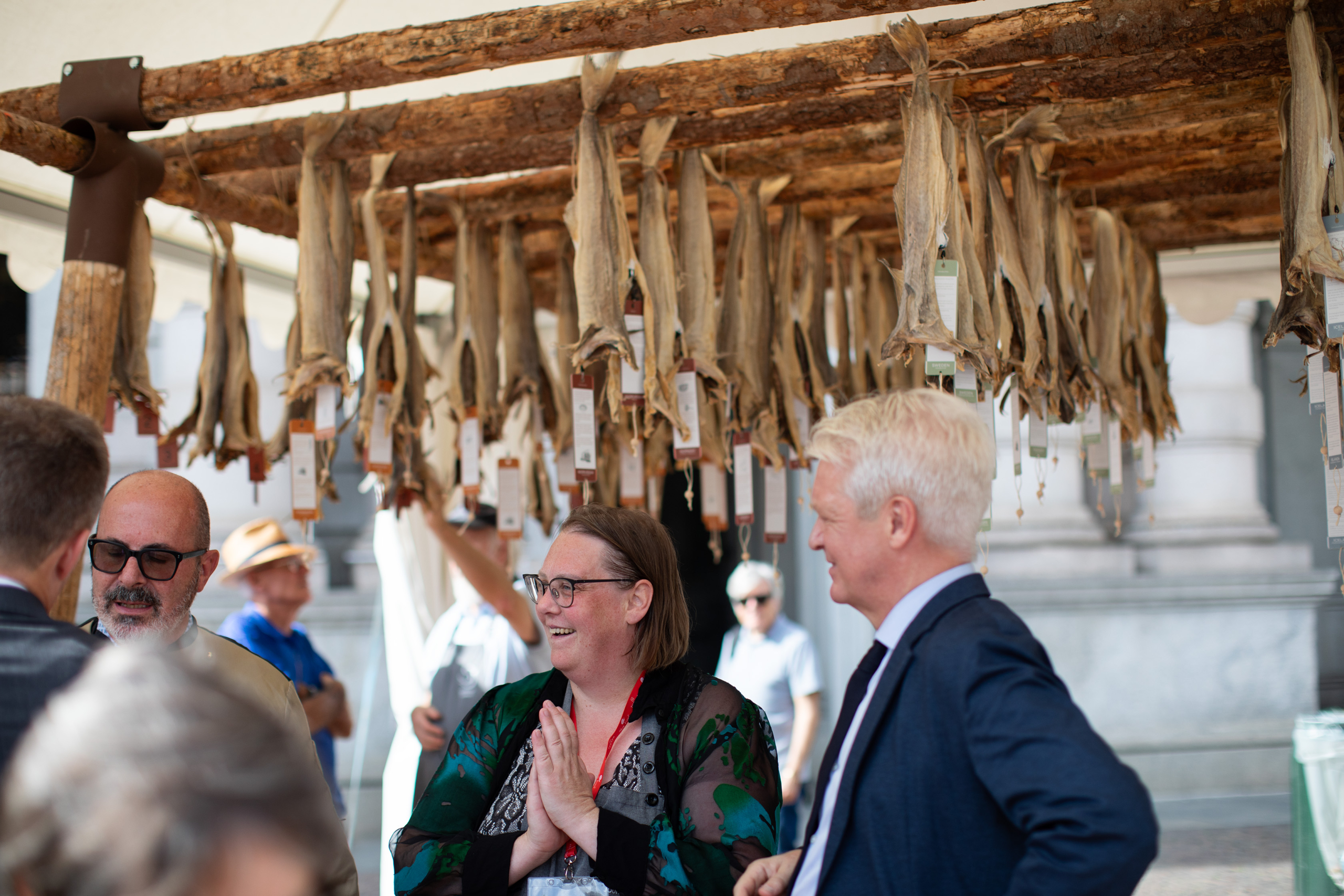
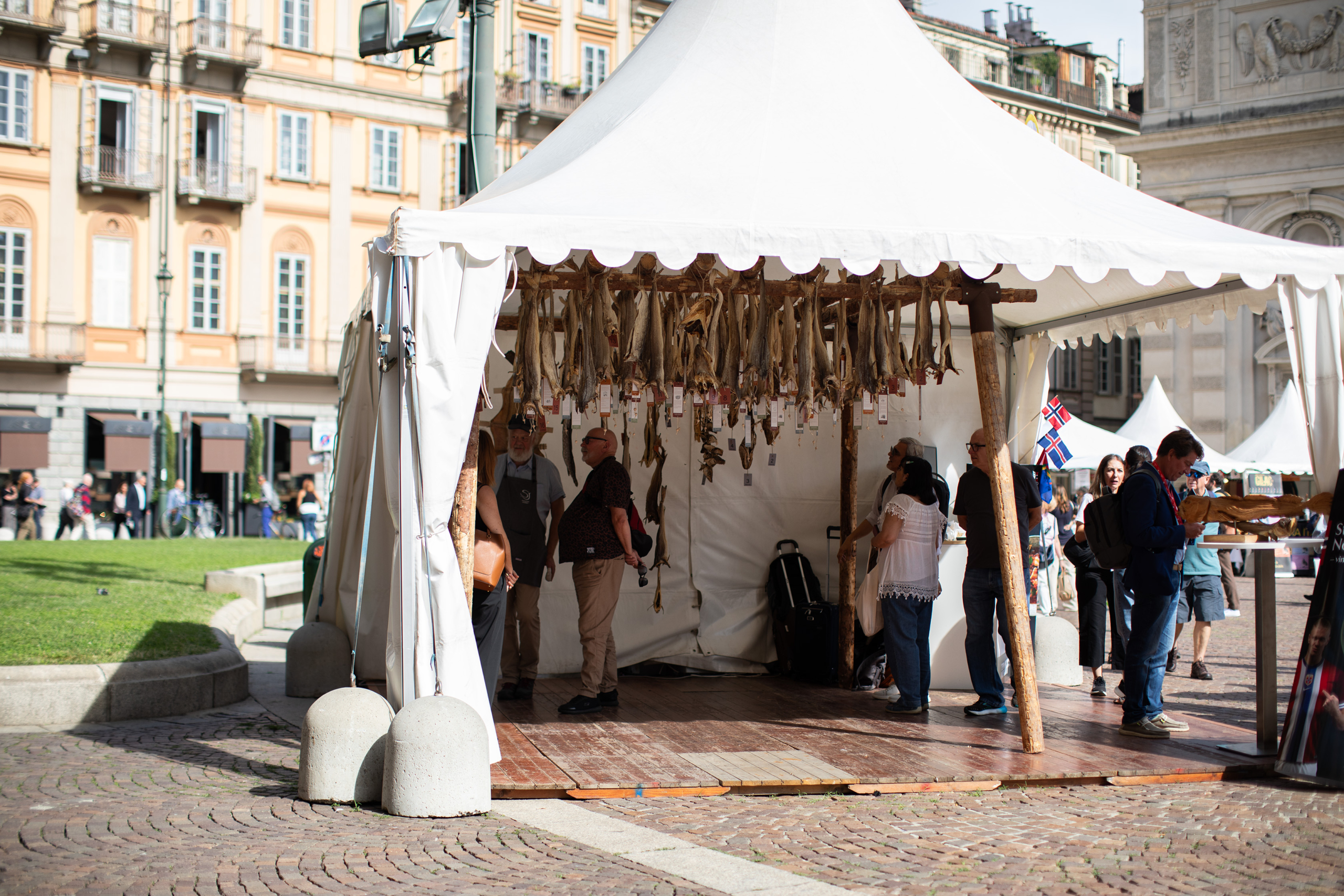
In Piazza Carlo Alberto in Turin, northern Italy, visitors can experience the tradition of stockfish with all senses at the Stockfish Journey exhibition, a part of the official program at the biennial Slow Food event Terra Madre Salone del Gusto.
The exhibition, a collaboration between the Icelandic Slow Food Network, Slow Food Bergen, Slow Food Mearra-Sápmi, and Kålrotsakademien in Sweden, focuses not only on the preserved cod in its many shapes and forms, but also on the food traditions and cultures surrounding it, reaching far beyond the Nordic countries, to markets and kitchens in Italy, Nigeria, Croatia, and Slovenia.
An important theme is reflected in the name of the exhibition – Stockfish Journey – highlighting how mobility has influenced culinary traditions surrounding stockfish across the world, as a result of trade, travel, and people meeting and connecting.
Stockfish in the Nordic Countries and Beyond
Dóra Svarvarsdottir, chair of the Slow Food Icelandic network, explains how stockfish has shaped cultures and relations between countries and continents:
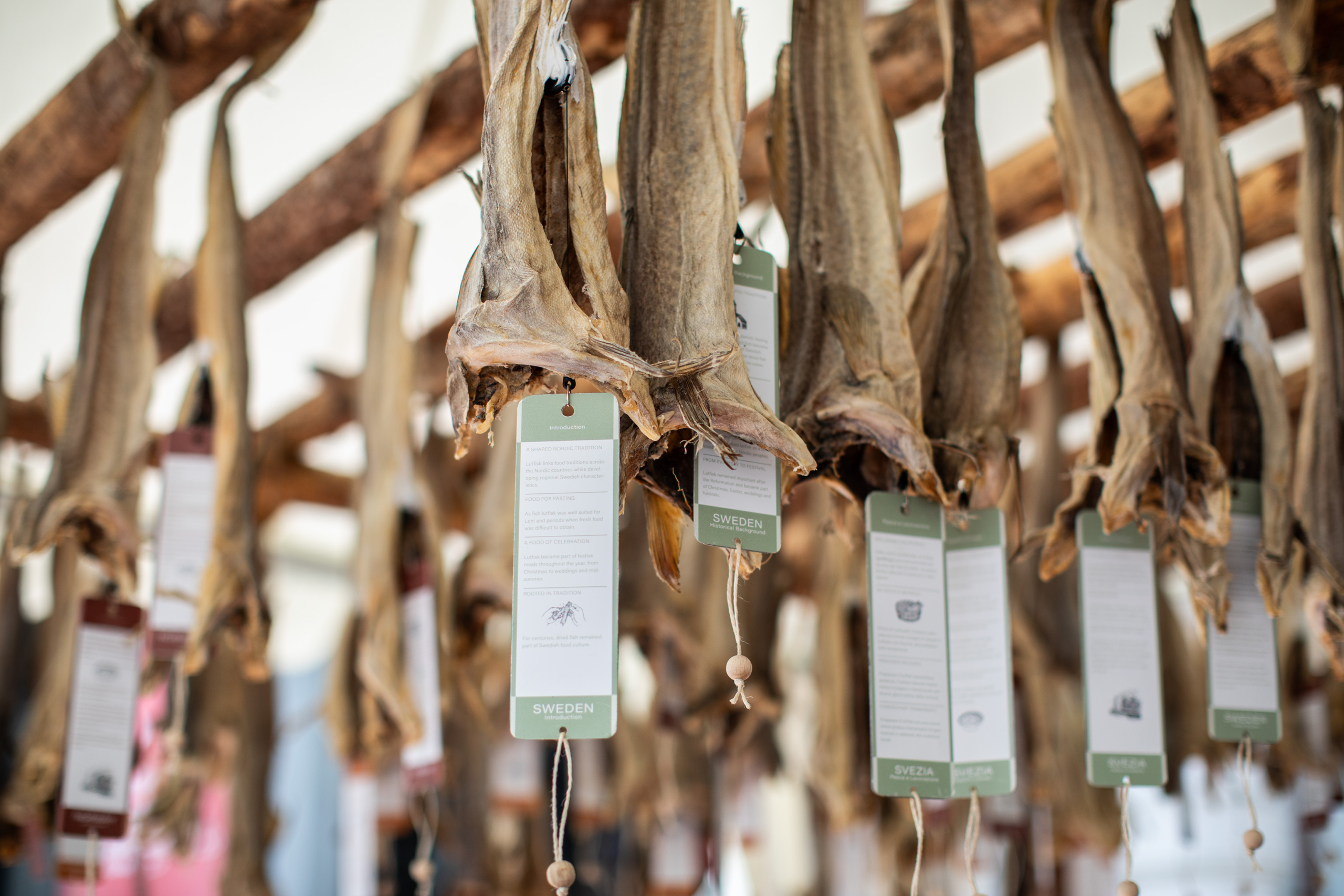
“Telling the story of stockfish, a journey as vast and complex as the fish itself, is no easy task. From its origins in the North Atlantic, dried by wind and sun, to its travels across continents where it became the foundation of trade connecting the far North with Italy, Nigeria, and beyond. This exhibition brings that story to life through all the senses: step inside the “hjell” and hear the gentle rattle of the fish, breathe in its unmistakable aroma, see and touch the product, and every day, enjoy a small taste of the tradition.”
In Iceland and Norway, the stockfish preservation dates back hundreds of years and remains a source of trade, with Italy as an especially important market. Dried cod heads with collarbones are prepared in Iceland for the Nigerian market. In Italy, stoccafisso, or baccalá, is deeply rooted in culinary traditions in many regions. In Sweden, dried fish is mostly common in the traditional dish lutfisk, prepared for Christmas.
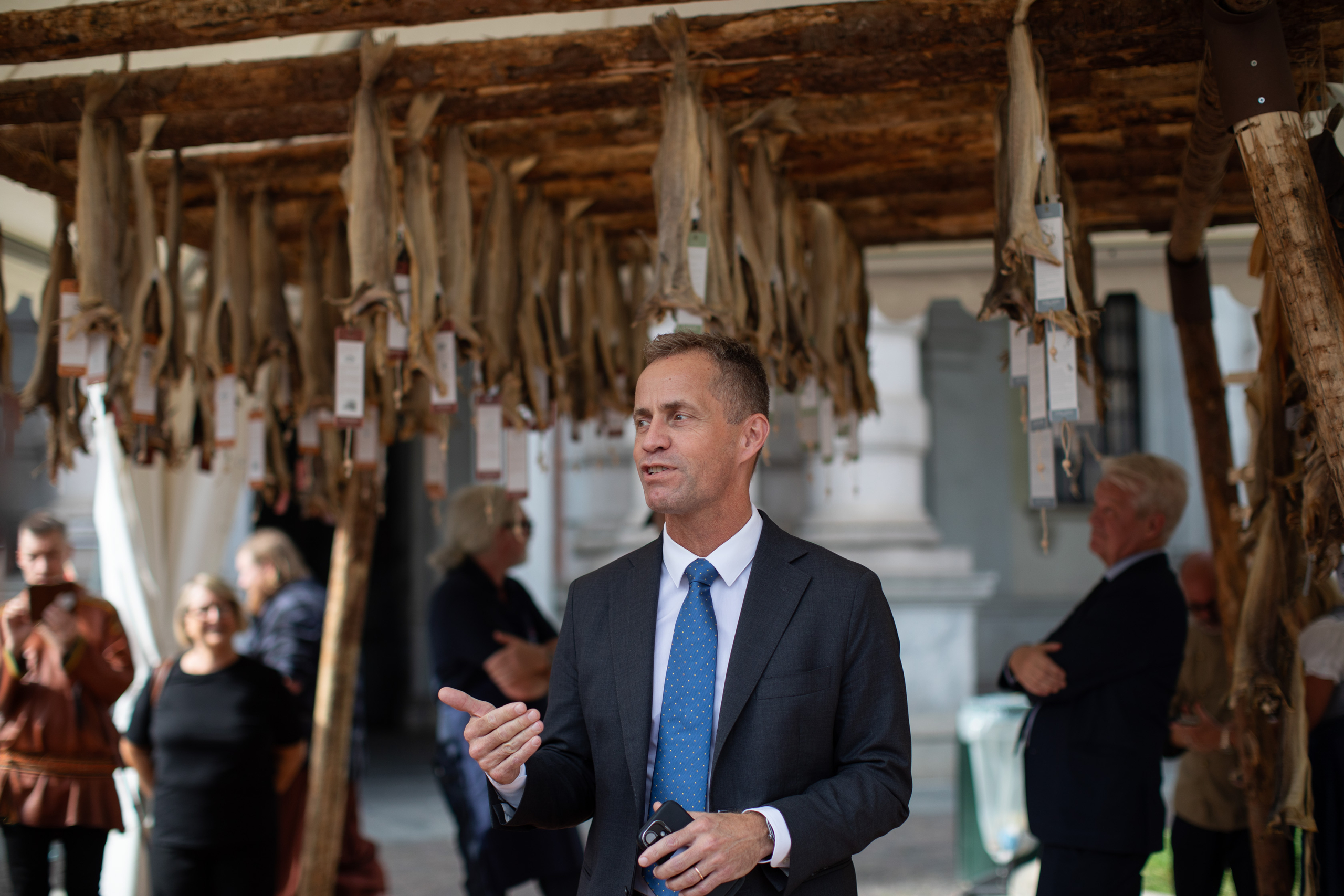
The opening of the exhibition was attended by the Icelandic ambassador to Italy, Guðmundur Árnason, who highlighted how Icelandic stockfish and Italian food culture have been connected through stockfish exports for over 100 years.
Tord Tukon, the Norwegian ambassador to Italy, emphasized that stockfish is about so much more than fish and trade; it is about culture and over 600 years of tradition, and still today seafood remains Norway’s most important export to Italy.
(Follow the links above to read more about the stockfish history in the various regions).
An immersive experience
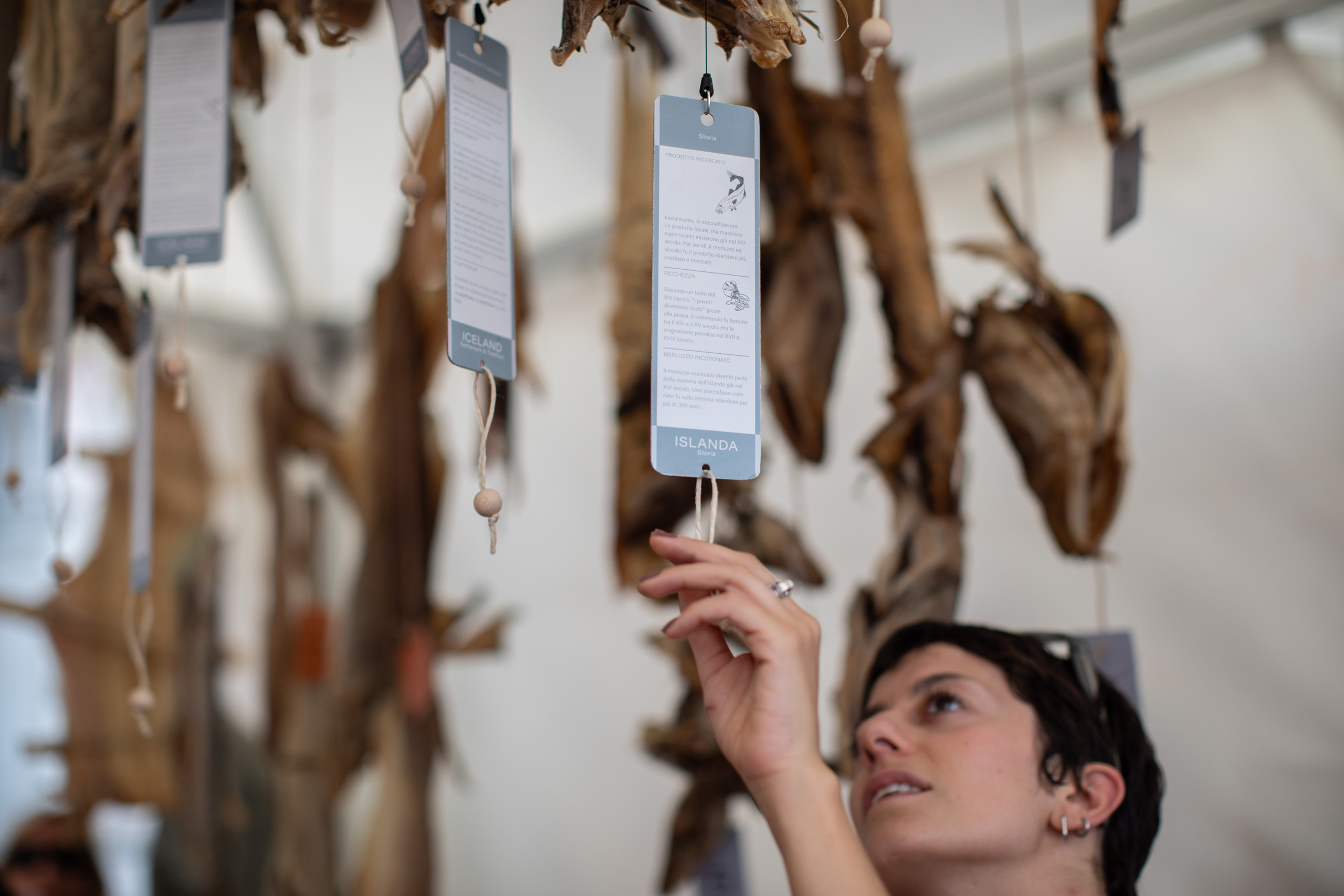
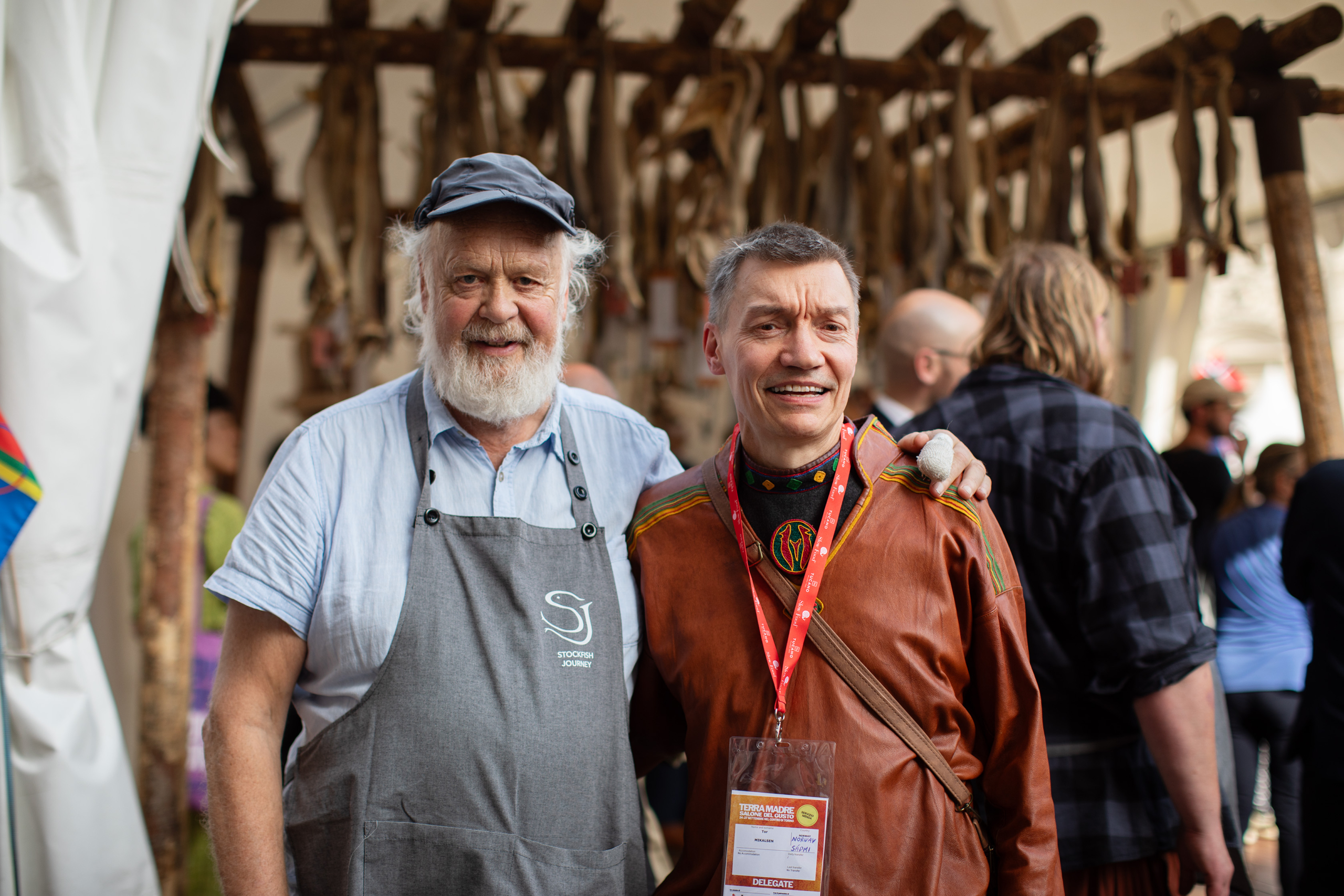
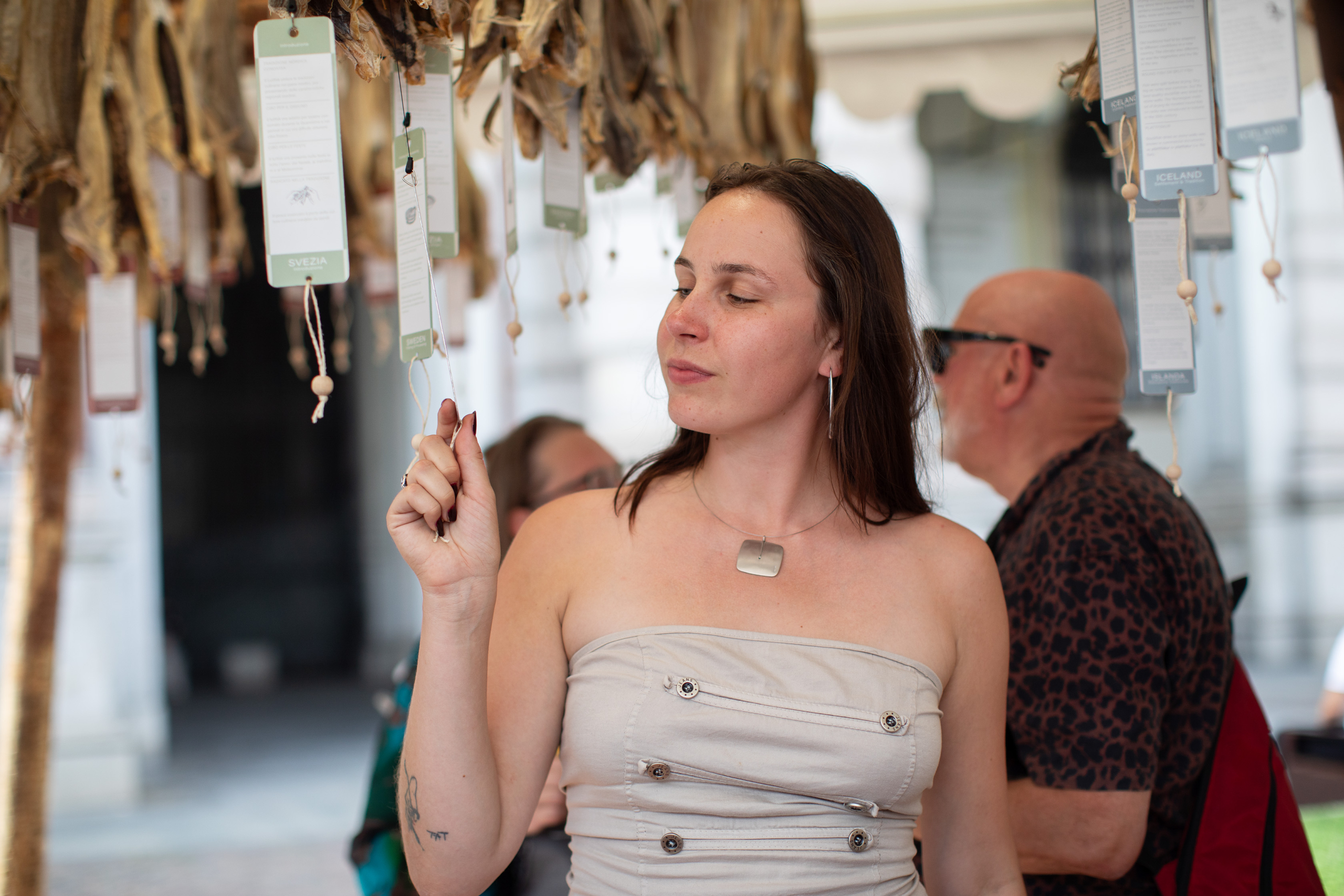
As said during the opening, storytelling is not only about the words; it is also about feelings. The exhibition, designed by Elín Ringsted, highlights the sensory side of storytelling, letting visitors explore stockfish up close by seeing, smelling, touching, and walking among the dried fish.
Hanging from a wooden drying rack, visitors can walk under the rows of dried fish. By pulling strings attached to plaques with information about stockfish, visitors interact with the traditions and learn about how the fish is preserved, graded, and prepared.
Next stops for the touring exhibition, which is closely linked to the UNESCO nomination of stockfish and dried fish traditions as an Intangible Cultural Heritage, are Venice, Bergen, Sweden, Northern Norway, and Iceland.
For more information about the history of stockfish and the upcoming exhibitions, visit stockfishjourney.is.